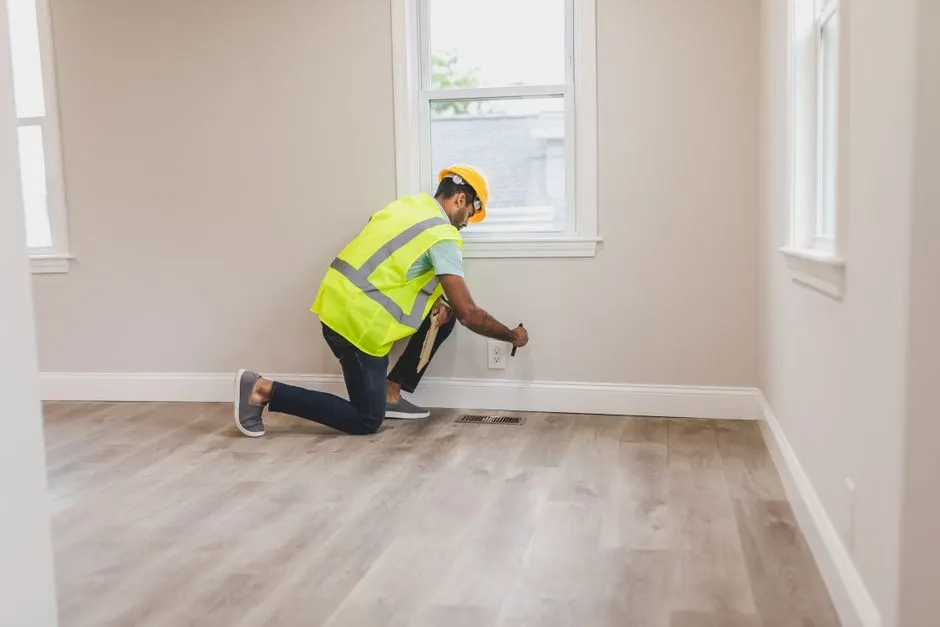
Seasonal damp checks after spray foam removal in Lancaster, Lancashire should be done twice a year - once in late autumn (October-November) and again in early spring (March-April). These checks catch moisture that creeps back into lofts, roof voids and cavity walls once the old foam has gone, before it turns into rot, mould or a failed mortgage survey. Lancaster's wet, coastal climate makes this more than a box-ticking exercise. This post covers exactly when to check, what to look for, how much inspections cost in 2026, and the mistakes that cost homeowners thousands.
Why damp checks matter after spray foam removal
Damp checks after spray foam removal in Lancaster matter because removing foam changes how your roof and walls handle moisture. Spray foam acts as a seal. Once it's gone, air moves differently through the loft, and any hidden leak or blocked ventilation that was masked for years suddenly shows itself.
We've removed foam from hundreds of Lancaster properties, and the pattern is always the same: the foam was hiding a problem, not causing it. A cracked tile, a blocked valley gutter, a failed flashing around a chimney - these were already leaking. The foam trapped the water against the timber. When we take the foam out, that moisture has nowhere to hide, and it starts to show on the rafters within weeks.
That's why the first three months after removal are the highest-risk period. If you don't check, you won't know until the ceiling stains or the timber starts to soften. A simple seasonal check catches it early, when a £150 repair is still a £150 repair.
When should you do seasonal damp checks in Lancaster?
The best time to do seasonal damp checks in Lancaster is late October, just before the worst of the winter rain, and again in late March, after the frosts have passed. Lancaster sits in one of the wettest parts of England, with average annual rainfall around 1,150mm - more than double London's. Most of that falls between October and January, driven in off Morecambe Bay on south-westerly winds.
That timing matters. If you check in October, you find the leaks that summer storms opened up and you fix them before the winter. If you check in March, you find the damage that winter caused - the saturated timbers, the blown plaster, the mould that started in a cold corner. Miss either window and you're reacting to a problem rather than preventing one.
For a full picture of what removal involves and how we schedule it around the seasons, see our Spray foam removal near me in Lancaster, Lancashire page.
What to check in each season
Each season throws a different problem at a Lancaster home. Here's what we look for when we're called out.
Autumn (October-November)
- Check the loft for daylight coming through the roof - a sure sign of slipped slates or tiles.
- Look at the underside of the roof deck for dark patches or damp stains on rafters.
- Check gutters and downpipes for blockages before the heavy rain arrives.
- Feel the insulation in the loft - if it's damp to the touch, water is getting in.
Winter (December-February)
- Watch for condensation on cold surfaces - single-glazed windows, cold water pipes, loft hatches.
- Check for ice dams on the roof edge; they force water under the tiles.
- Look for mould growth in corners of bedrooms and behind wardrobes.
- Check that loft vents and eaves gaps aren't blocked by stored boxes.
Spring (March-April)
- Inspect timber for signs of wet rot - soft, spongy wood, or a musty smell.
- Check the ceiling below the loft for new stains or bubbling paint.
- Look at the mortar around the chimney; frost damage shows up in spring.
- Test the moisture content of rafters with a meter - anything above 20% needs attention.
Summer (June-August)
- Check for wasp nests and rodent activity in the loft - they get in through gaps the foam used to block.
- Look for cracked render on gable walls after hot weather.
- Check ventilation paths are clear before the damp season returns.
How to check for damp after spray foam removal in Lancaster
How to check for damp after spray foam removal in Lancaster: start in the loft, work downwards, and use your nose as much as your eyes. A musty, earthy smell is the first sign. Then look for dark patches on rafters, damp insulation, and condensation on the underside of the roof felt.
You'll need a torch, a moisture meter (about £20 from any DIY shop), and a notebook. Check every rafter along the ridge and at the eaves. Pay special attention to the chimney breast and any valleys where two roof slopes meet - those are the two spots we see leak most often in Lancaster's older terraces.
If you find moisture readings above 20%, don't panic. It usually means a leak above, not a problem with the removal itself. Get the roof repaired, then let the timber dry out. If readings stay high after two weeks of dry weather, call us back in.
For homes where the foam was in the walls rather than the roof, the check is different. We cover that in more detail on our cavity wall spray foam removal in Lancaster, Lancashire page.
How much do damp checks cost after spray foam removal in Lancaster, Lancashire?
Typical 2026 pricing for a damp check after spray foam removal in Lancaster, Lancashire is £150-£350 for a standard domestic property. That covers a full loft inspection, moisture readings, a written report with photos, and recommendations. If you need a full building survey with thermal imaging, expect £400-£600.
We charge £180 for a standard post-removal damp check across Lancaster and the surrounding areas. That includes a moisture meter survey of all accessible timbers, a check of the ventilation paths, and a same-day verbal summary. If we find a problem that needs fixing, we'll tell you what it is and what it costs - no pressure, no hidden fees.
Compare that to the cost of ignoring it. Replacing a rotten rafter runs £300-£500 per timber. Treating widespread wet rot in a loft can hit £3,000-£5,000. A £180 check twice a year is cheap insurance.
Common mistakes to avoid
The biggest mistake we see is homeowners assuming the removal itself caused the damp. It didn't. The damp was already there - the foam was just hiding it. Here are the other traps:
- Checking only once a year. Lancaster's weather swings hard between seasons. Two checks a year is the minimum.
- Ignoring the loft because it's "out of sight". By the time a stain appears on the bedroom ceiling, the timber above has been wet for months.
- Blocking ventilation. After foam removal, air needs to move through the loft. Don't stack boxes against the eaves or cover vents with insulation.
- Using a cheap moisture meter incorrectly. Press the pins into the timber, not the surface. A reading on the surface tells you nothing.
- Not checking the chimney. Chimneys are the number one leak source in Lancaster's Victorian terraces. Check the flashing and the mortar crown every time.
We also see people skip the check because they're planning to sell. That's backwards. A buyer's surveyor will find the damp, and you'll end up negotiating thousands off the price. A £180 check now saves you £5,000 later.
When to call a professional
Call a professional when you find moisture readings above 20% on two or more timbers, when you can smell damp but can't see it, or when you're not comfortable climbing into the loft. We handle this every day across Lancaster, from Spray foam removal in Lancaster City Centre to the older properties out towards Scotforth Spray foam removal.
We'll come out, run a full moisture survey, and tell you exactly what's going on. If it's a simple fix, we'll tell you. If it needs a roofer, we'll tell you that too. We don't do unnecessary work.
If you're not sure whether your loft needs a check, book one anyway. It's cheaper than guessing.
Frequently Asked Questions
When should I do seasonal damp checks after spray foam removal in Lancaster?
Do them twice a year: late October before the winter rain, and late March after the frosts. Lancaster gets around 1,150mm of rain a year, most of it between October and January, so those two windows catch the highest-risk periods.
How much do damp checks cost after spray foam removal in Lancaster, Lancashire?
Expect £150-£350 for a standard domestic check in 2026, or £400-£600 if you need thermal imaging. We charge £180 for a full post-removal damp survey with moisture readings and a written summary.
Can spray foam removal cause damp in Lancaster homes?
No - removal doesn't cause damp. It reveals damp that was already there. Spray foam traps moisture against timber. Once it's gone, that moisture becomes visible. If you find damp after removal, the source is almost always a roof leak or blocked ventilation.
What moisture reading is too high for roof timbers?
Anything above 20% needs investigation. Below 15% is normal for dry timber. Between 15% and 20% is borderline - check again in two weeks. Above 20% means there's an active leak that needs fixing.
Do I need a professional damp check if I'm selling my house?
Yes. A buyer's surveyor will find any damp, and you'll end up negotiating the price down. A £180 check now gives you time to fix the problem on your terms, not the buyer's.
Get help with Spray foam removal in Lancaster
We handle spray foam removal and post-removal damp checks across Lancaster and the surrounding villages. If your loft smells musty or you've spotted a stain, call us on 03335672543 and we'll get you booked in.